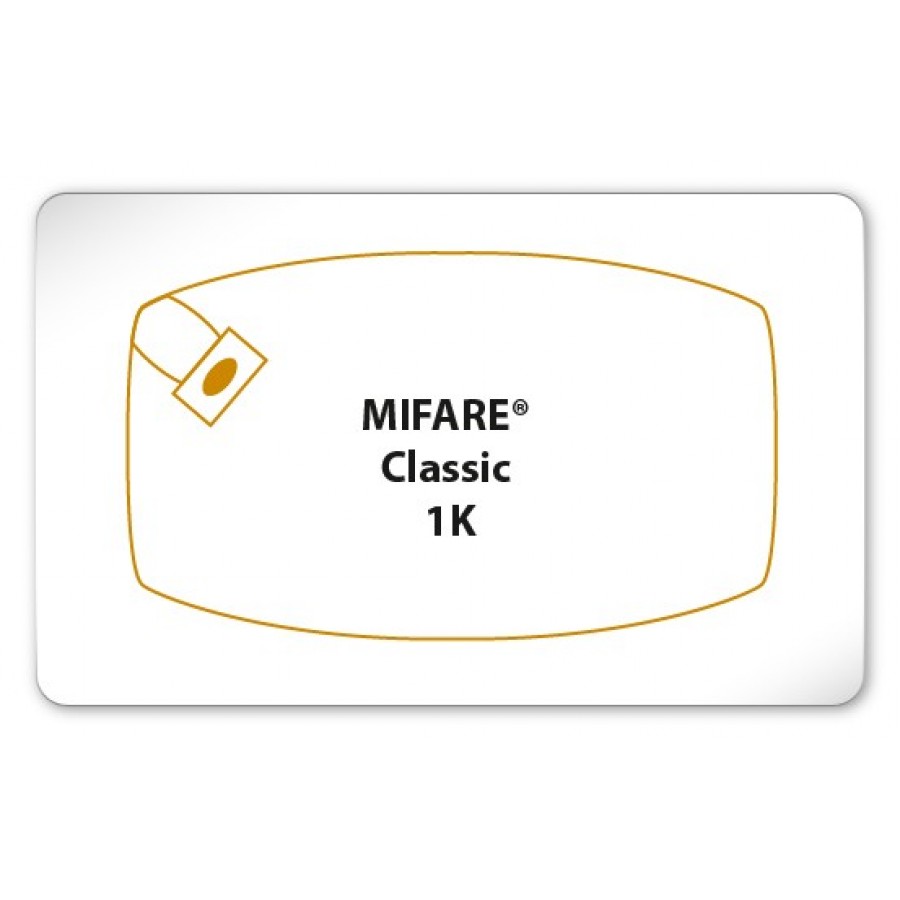
13.56MHz NXP Mifare 1K RFID Blank Cards Pack of 100
- Product Code: RCC03
- Availability: In Stock
-
$50.00
- 5 or more $36.96
- 10 or more $33.34
- 50 or more $32.61
- 100 or more $32.03
The MIFARE 1K (also known as MIFARE Classic 1K or S50) is a widely used high-frequency (HF) contactless smart card IC developed by NXP Semiconductors. Operating at 13.56 MHz, it is one of the most popular and widely deployed RFID chips globally, primarily known for its use in access control, public transportation, and micropayment systems.
1. Core Definition
The MIFARE 1K is a passive (battery-free) contactless memory chip compliant with the ISO/IEC 14443 Type A standard. It provides 1 KB (1024 bytes) of EEPROM memoryorganized into 16 sectors, with each sector protected by a proprietary Crypto1 stream cipher authentication mechanism. It is considered a legacy technology but remains prevalent due to its massive installed base.
2. Key Technical Specifications
Parameter | Specification |
Chip Model | NXP MIFARE Classic 1K (MF1ICS50) |
RF Standard | ISO/IEC 14443‑A (NFC Forum Tag Type 1/2) |
Frequency | 13.56 MHz (HF) |
Memory Size | 1 KB EEPROM (1024 bytes) |
Memory Organization | 16 sectors × 4 blocks (each block 16 bytes) |
Data Rate | 106 kbit/s |
Read/Write Distance | Typically 2–10 cm (depends on reader antenna) |
Security | Proprietary Crypto1 stream cipher (mutual three‑pass authentication) |
Write Endurance | ≥100,000 cycles |
Data Retention | ≥10 years |
Operating Temperature | -25 °C to +70 °C |
3. Memory Structure
- Sector 0, Block 0: Contains the 4‑byte (or 7‑byte) UID and manufacturer data (read‑only).
- Sectors 1‑15: Each sector has 3 data blocks (48 bytes) and 1 sector trailer (16 bytes).
- Sector Trailer: Stores two 6‑byte keys (Key A and Key B) and 4‑byte access conditions defining read/write permissions for each block.
4. Security
- Crypto1: A proprietary 48‑bit stream cipher used for authentication and data encryption over the air.
- Vulnerabilities: The Crypto1 cipher has been cryptographically broken (e.g., via nested authentication attacks, Darkside attack). The keys can be recovered with tools like Proxmark3, making the chip vulnerable to cloning and replay attacks.
- Despite its weaknesses, the chip remains widely used in low‑ to medium‑security applications.
5. Common Applications
- Physical Access Control: Office buildings, hotel rooms, residential gates (often in CR80 card or key fob form).
- Public Transportation: Contactless fare cards for buses, metros, and trams (especially in early systems).
- Micro‑Payments & Loyalty: Vending machines, canteen cards, prepaid stored‑value cards.
- Campus Cards: Student IDs for library, attendance, and meal payments.
6. Comparison with MIFARE Classic 4K
Feature | MIFARE Classic 1K | MIFARE Classic 4K |
Memory | 1 KB (1024 bytes) | 4 KB (4096 bytes) |
Sectors | 16 sectors (4 blocks each) | 40 sectors (32×4 blocks + 8×16 blocks) |
Application | Light‑duty, lower‑cost systems | Higher‑capacity systems (e.g., transit with complex fare tables) |
7. Clones & Alternatives
- Fudan FM11RF08: A popular Chinese‑made clone, fully compatible with MIFARE Classic 1K.
- MIFARE Plus: NXP’s upgraded version with AES‑128 security (offers migration path).
- MIFARE DESFire: High‑security, multi‑application replacement with AES and a file system.
Summary
The MIFARE 1K is a legacy but ubiquitous contactless memory chip that revolutionized access and ticketing systems. Its simple memory‑block structure and low cost contributed to its massive adoption. However, its known cryptographic weaknessesmake it unsuitable for new high‑security deployments. For modern systems, NXP recommends migrating to MIFARE Plus or MIFARE DESFire for enhanced security.